 English
 العربية
 中文語言
 हिंदी भाषा
 हespañol
 русский
 Português
 Le français
 Deutsch
 ภาษาไทย
 Português
 日本語

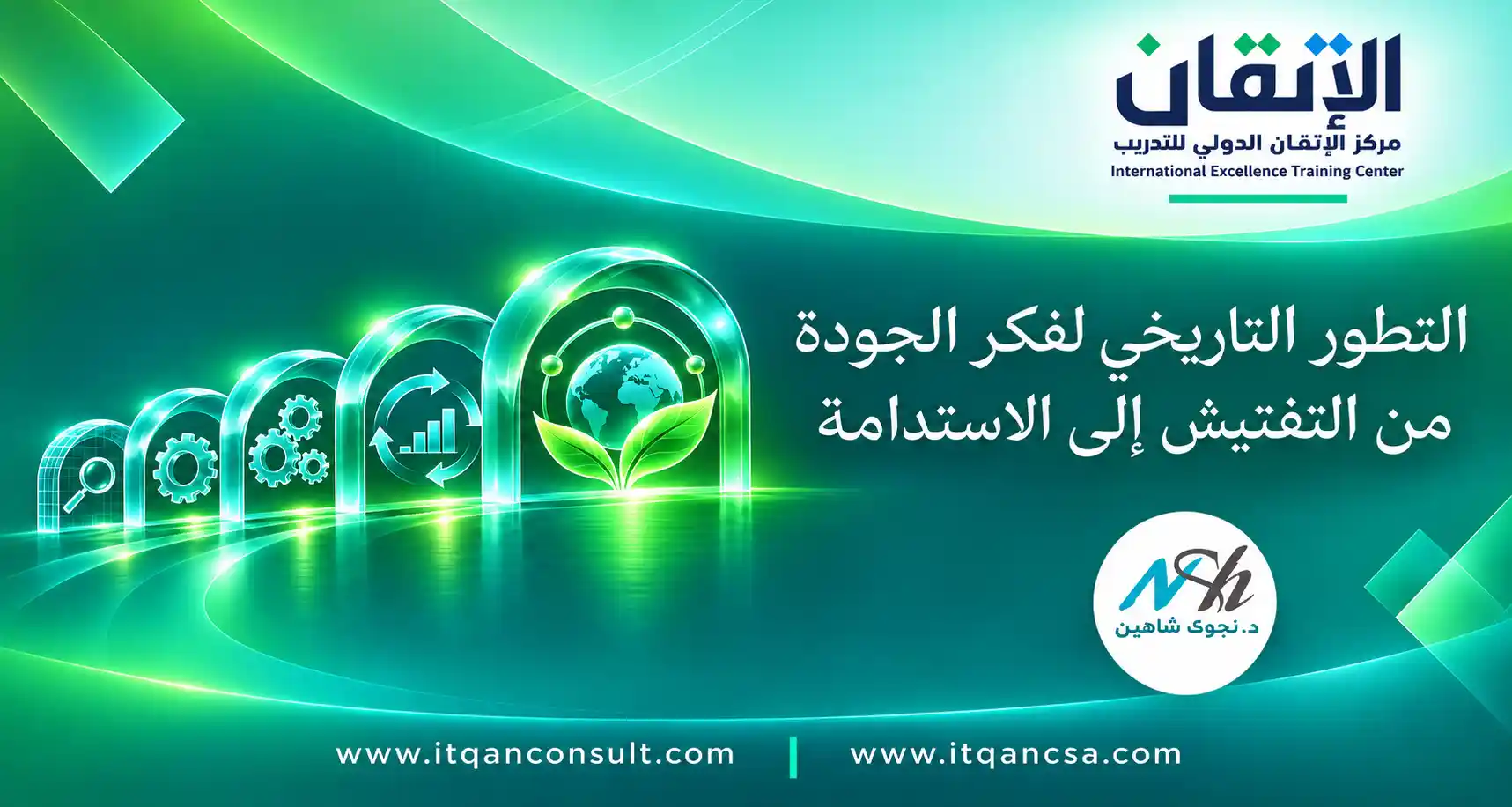
The Historical Evolution of Quality Thinking: From Inspection to Sustainability
An exploration of the overlapping paths through which quality expanded from inspecting outputs to understanding processes, organizational learning, excellence and sustainability.
Contents
Key Concepts
Systematic Inspection
Checking outputs for conformity and identifying nonconformities, while recognizing that inspection alone does not prevent repeated errors.
Statistical Control
Using data to understand process stability, variation in results and the reasons for change, rather than inspecting outputs alone.
Management and Improvement
Linking planning, control and improvement to management responsibility, employee participation and the interdependence of functions.
Sustainability and Digitalization
Expanding quality concerns to the durability of value, data reliability and the effects of improvement on people and resources.
The Evolution of Quality Thinking: Overlapping Pathways
Craftsmanship and Inspection
The craftsperson's reputation, followed by conformity inspection as production expanded
Statistical Control
Understanding variation and process stability through data
Managerial Learning
Deming's and Juran's contributions and management's responsibility for improvement
Quality Systems and Excellence
Organizing responsibilities and aligning direction, execution and results
Sustainability and Digitalization
Reliable data, sustained value and the effects of improvement on resources and people
These pathways are interconnected interpretations, not distinct stages with fixed dates. The emergence of a new approach does not mean its predecessors disappear.
An Interwoven Evolution Responding to Changing Business Needs
The history of quality helps explain why its practices differ today. Some verify whether outputs conform to requirements; others control processes, while still others organize learning and development across the organization. This diversity did not emerge all at once. It accumulated as production volumes grew, services became more complex and beneficiaries' expectations changed.
This article presents major pathways for understanding that evolution, emphasizing that they overlap and spread at different rates across countries and sectors. They are not stages with fixed chronological boundaries, and a new approach does not make earlier approaches obsolete.
From the Craftsperson's Responsibility to Systematic Inspection
In some craft production systems, the maker's knowledge and reputation helped establish trust. The growth of industrial production then increased the need for systematic verification that outputs met specifications. The American Society for Quality (ASQ) describes historical evidence from European craft guilds and industrialization along this pathway. [1]
Inspection serves an important purpose in detecting nonconformities and protecting beneficiaries. Yet relying on it alone can allow errors to be produced repeatedly and then sorted out. Prevention instead requires understanding what happens within the process. This distinction matters in services as well as manufacturing: reviewing a finished document differs from improving the steps used to prepare it.
Statistical Control and Understanding Variation
The development of statistical control during the twentieth century was linked to Walter Shewhart's work on monitoring processes and analyzing variation. Attention gradually shifted toward using data to understand process stability and the causes of changes in results, rather than relying solely on inspection of final outputs. [1]
This managerial insight remains practical: not every movement in an indicator signals meaningful change, and not every temporary decline warrants an immediate change in procedure. Interpreting data requires knowing how they were collected, the process context and whether a change exceeds the process's usual pattern.
For example, service time may fluctuate from one day to another because demand changes. Before judging team performance, managers need to understand transaction volume and types, and the system's capacity to handle them.
Expanding Responsibility and Managerial Learning
The work of Deming and Juran, together with developments after the Second World War, including Japan's experience, broadened quality concerns to include management responsibility, learning and improvement. Juran's Trilogy shows the relationship among quality planning, quality control and quality improvement. [1, 2]
Approaches to total quality subsequently gained ground, linking quality to employee involvement, coordination among functions and a focus on beneficiaries. The implication is that improving an outcome may require collaboration across multiple departments rather than treating an isolated point at the end of a process.
Attribution of improvement cycles also calls for precision: the Deming Institute explains that the formulation Deming emphasized was PDSA—Plan, Do, Study, Act—with learning from testing hypotheses at its core. Its third step is termed Study, unlike Check in PDCA. [3]
From Quality Systems to Comprehensive Excellence Frameworks
A quality management system helps organize work, clarify responsibilities and monitor requirements, while excellence frameworks provide a broader view of the alignment among direction, execution and results. The EFQM Model is one such example. [4, 5]
This broader perspective allows organizations to ask how their processes relate to strategy and what value they create for beneficiaries and stakeholders. The answers must still rest on evidence: having a policy, certificate or report is not by itself enough to demonstrate the quality of the actual experience.
Earlier tools remain important within this framework. Inspection may still be essential; control supports stability; and improvement develops capability. Context determines how these approaches complement one another.
Sustainability and Digitalization in Contemporary Thinking
Sustainability and digitalization can be viewed as fields that broaden the questions asked about quality: How do we sustain value amid changing conditions? How do we ensure that decision-guiding data are reliable? What effects does improvement have on resources and people? This is an analytical reading of emerging interests, not a declaration of a single historical phase beginning in a particular year.
In practice, organizations need to determine where their efforts are concentrated today. Are they occupied with repeatedly correcting errors, understanding their causes, or preventing them and learning from them? Such diagnosis helps identify the next step instead of merely collecting disconnected tools.
The next article moves from this historical overview to schools of managerial thought on quality, explaining how their underlying approaches differ and how they can complement one another.
References
[1] ASQ — History of Qualityhttps://asq.org/quality-resources/history-of-quality
[2] Juran Institute — Quality Trilogyhttps://www.juran.com/universal-methods/
[3] The Deming Institute — PDSA Cyclehttps://deming.org/explore/pdsa/
[4] ISO — Quality Managementhttps://www.iso.org/quality-management
[5] EFQM — The Modelhttps://efqm.org/the-efqm-model/
Stay Connected
Reproduction for educational, training and research purposes is permitted, provided the author is credited and the meaning and references are preserved.
Add New Comment